
Flexible Manufacturing Systems (FMS)
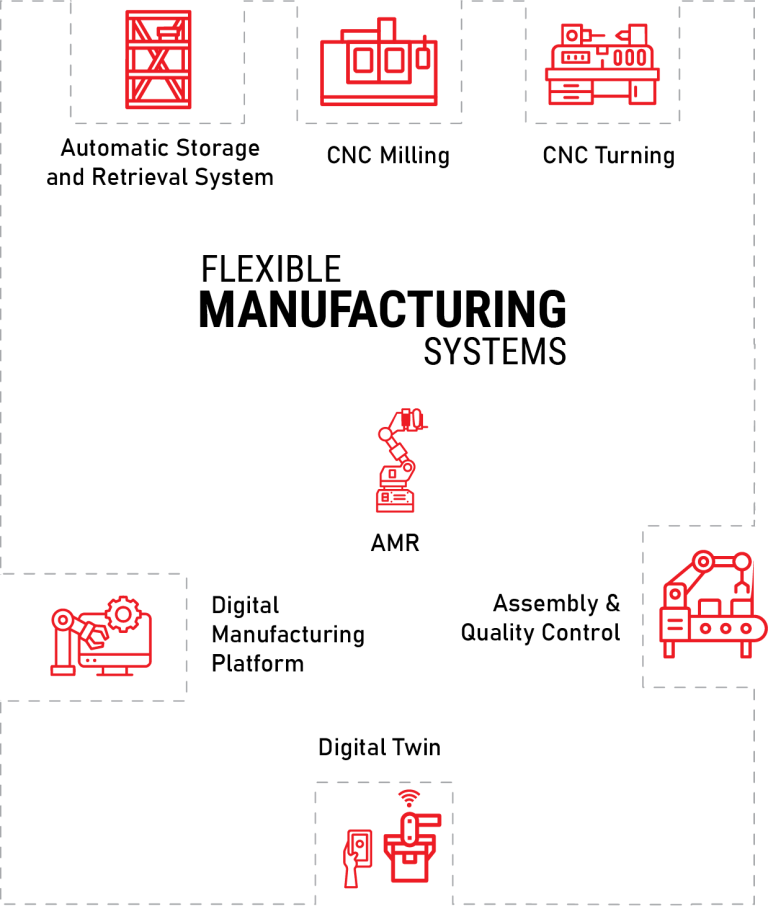
A Flexible Manufacturing System (FMS) is an advanced manufacturing setup that integrates CNC machines, industrial robots, automated material handling, sensors, and a central control computer to create a flexible and automated production environment.
In educational institutions, FMS is a powerful learning platform that exposes students to real-world smart manufacturing, Industry 4.0 concepts, and automation technologies used in modern industries such as automotive, aerospace, electronics, and precision engineering.
Importance of FMS in Education
FMS provides hands-on experience in advanced production systems and helps students understand how automation and computer integration improve efficiency, quality, and flexibility.
Key reasons to implement FMS in educational institutes:
- Develops Industry 4.0-ready skills
- Facilitates practical understanding of automated workflow
- Enables interdisciplinary learning across mechanical, electronics, mechatronics, robotics, and computer engineering
- Supports research, innovation, and industry collaboration
- Improves student employability in manufacturing and automation sectors
Components of an Educational FMS
1. CNC Machines
CNC milling and turning machines perform automated machining operations controlled by G-code and integrated with robots.
2. Industrial/ Educational Robot
A 4-axis or 6-axis robot performs loading, unloading, pick-and-place, palletizing, or inspection tasks.
3. Material Handling System
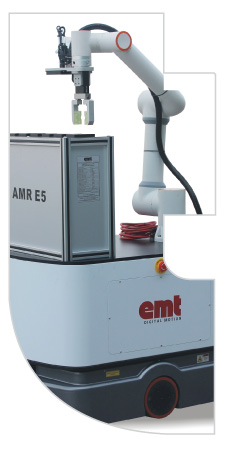
Conveyors, gantry systems, or AGV/AMR units transport materials between workstations.
4. Automated Storage & Retrieval System (ASRS)
Stores raw materials or finished parts, controlled by FMS software.
5. Sensors and IoT Devices
RFID/barcode scanners, vision systems, proximity sensors, and safety systems enable intelligent monitoring.
6. FMS Control Software
Coordinates CNCs, robots, conveyors, and ASRS. Handles job scheduling, routing, data collection, and real-time monitoring.
Learning Outcomes for Students
Technical Skills
- CNC machining and toolpath understanding
- Robot programming and robot–CNC integration
- Production scheduling and routing
- Material handling automation
- PLC/SCADA/MES integration
- IoT-based machine monitoring
Industry 4.0 Skills
- Cyber-physical systems
- Digital twin concepts
- Data analytics and predictive maintenance
- Smart factory connectivity
- Professional Skills:
- Team-based problem solving
- Process optimization and lean manufacturing
- Safety and industrial standards.
Benefits to Educational Institutes
- Creates an advanced manufacturing lab
- Enhances placement opportunities
- Strengthens collaboration with industries
- Enables FDP, certification courses, and internships
- Attracts research projects and grants
- Prepares students for roles in automation, robotics, CNC, production, and smart manufacturing
Applications in Learning and Research
- Robot-assisted machining
- Multi-machine scheduling optimization
- Vision-based part inspection
- IoT-enabled machine data collection
- Integration of AGV/AMR with CNC systems
- Development of smart manufacturing algorithms